Heirloom Recipe Decoder

    Your grandmother's recipes, decoded.

    Paste the ingredients from any handwritten card — we'll reconstruct the instructions you can actually cook from. Free. No signup.

    Sage— kitchen-savvy decoder

    Free. No signup to try. Sign up only when you save to your cookbook.

    Three cards. Three eras. Three real recipes.

    Ingredients-only handwritten cards from the 1880s, 1910s, and 1950s — each one missing oven temperatures, methods, and timing. Here's what Sage gives you back.

    Great-grandmother's spice cake

    1910s

    Original card
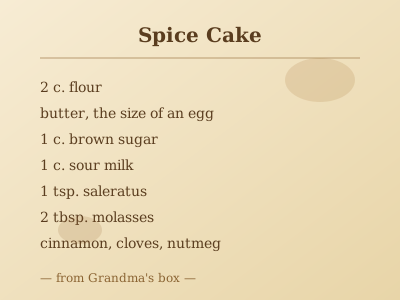
    Stained, handwritten 1910s recipe card listing ingredients only — no oven temperature or method.

    Flour, "butter the size of an egg," saleratus, sour milk, molasses, spices — no oven temperature, no method, no time.

    Reconstructed by Sage

    1910s Spice Layer Cake

    1. 1.Cream the butter (about 1/4 cup) with the brown sugar until light.
    2. 2.Whisk the saleratus (≈ 1/2 tsp baking soda) into the sour milk and let it foam.
    3. 3.Alternate dry and wet into the creamed butter; bake 30–35 min.
    350°F ovenTwo 8" pansSaleratus → baking sodaSour milk → buttermilk
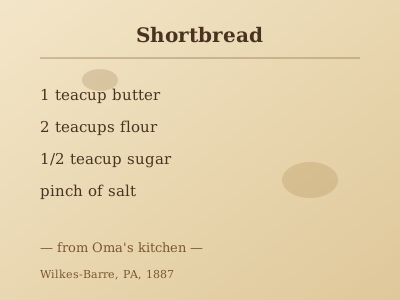
    Pennsylvania Dutch shortbread

    1880s

    Original card

    Faded 1880s recipe card with handwritten German-influenced shortbread ingredients and no method.

    "One teacup butter, two teacups flour, half a teacup sugar." No oven, no time, no temperature.

    Reconstructed by Sage

    1880s Pennsylvania Dutch Shortbread

    1. 1.Rub the butter into the flour with your fingertips until sandy.
    2. 2.Press into a buttered 8" pan; prick all over with a fork.
    3. 3.Bake 30 minutes until pale gold; cut while warm.
    325°F oven"Teacup" → 3/4 cupMethod: rub-in, not creamedCut warm, cool in pan

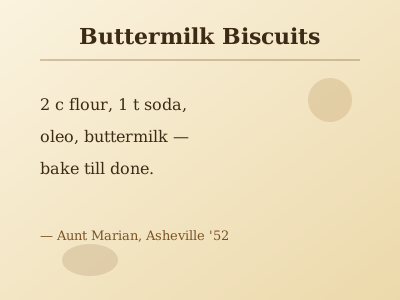
    Aunt Marian's buttermilk biscuits

    1950s

    Original card

    Mid-century recipe card with looping cursive listing biscuit ingredients on a single line.

    "2 c flour, 1 t soda, oleo, buttermilk." That's it — a postcard, not a recipe.

    Reconstructed by Sage

    1950s Buttermilk Drop Biscuits

    1. 1.Cut the oleo (≈ 4 tbsp margarine or butter) into the dry until pea-sized.
    2. 2.Stir in the buttermilk until just-shaggy — do not overmix.
    3. 3.Drop heaping spoonfuls onto a sheet; bake 12–14 min.
    450°F ovenOleo → margarine/butterDrop-biscuit method12–14 min until tops gold

    Real-user testimonials land here in v1.1.

    Pending permissions from the Reddit and Pinterest preservers featured in the launch thread.

    How it works

    Four steps. About sixty seconds for the first one.

    1. 1

      Paste the ingredients

      Type or paste the ingredient list from any handwritten card. Old units like "gill" or "saleratus" are fine — Sage knows them.

    2. 2

      Sage reconstructs the method

      Period-appropriate oven temperature, mixing method, and timing — built around how a cook in that era actually worked.

    3. 3

      Save it to your cookbook

      Free account so your grandmother's recipes stay safe across devices, with the original card preserved alongside the decoded version.

    4. 4

      Build a heritage cookbook

      Over time, the saved recipes become a printed cookbook your cousins can hold — softcover from $29.

    What Sage can decode

    From Civil-war-era ledgers to mid-century Pyrex casseroles, with the period units and cuisines that bend modern AI in half.

    1850s

    Civil-war-era ledgers, gill measures, "cakes of yeast"

    1880s

    Pennsylvania Dutch, Scottish shortbreads, teacup units

    1910s

    Saleratus, sour milk, hand-creamed butter cakes

    1930s

    Depression-era substitutions, condensed milk, cold-oven cakes

    1950s

    Oleo, Pyrex casseroles, cake-mix doctoring

    Period units we recognize

    Sage translates the units a modern cook can't Google.

    gill
    teacup
    saleratus
    oleo
    "butter the size of an egg"
    cakes of yeast
    sour milk
    sweet milk
    "a quick oven"
    "a slow oven"

    Cuisines we've decoded

    Validated against real heirloom cards — eight cuisines and counting.

    American Southern
    Pennsylvania Dutch
    Jewish-American
    Italian-American
    Scottish
    Norwegian
    Irish
    Cajun & Creole

    If Sage isn't sure, Sage asks. We never invent quantities or timing for a recipe we can't place. Better an honest question than a confident wrong answer.

    When you have a few saved

    Build a printed cookbook your cousins can hold.

    When you've saved twelve or more family recipes, Old Family Recipe turns them into a hardcover printed in North Carolina. The original handwritten cards print alongside the decoded recipes — nothing of the family hand gets lost.

    See cookbook editionsSoftcover from $29.

    Cookbook preview photography lands here in v1.1.

    Real cookbook mock with a decoded recipe inside — pending art direction.